Dr. Navneet Singh
MBBS, MD, FCCS
Chairman and Managing Director · EMSOS Group of Companies
Safe. Specialised. Global.
When the receiving bedside is in Delhi or the wider NCR, EMSOS builds a USA-origin medical flight around clinical clearance first—then aircraft, escorts and ground ambulance timing.

NCR arrivals planned with care
Delhi transfers are rarely “just get to India.” Relatives usually have a named consultant, a preferred ICU, or a rehabilitation plan inside the National Capital Region. That detail should drive the timeline from the first call.
EMSOS physicians review whether the patient can tolerate a long corridor with technical stops. Only then do coordinators lock US pickup, long-range aircraft and the Delhi-side ambulance to your nominated hospital.
If you are still choosing between Delhi, Gurgaon or Noida, say so early. Wrong-side ground routing wastes hours after landing.
Fixed-wing air ambulances use airports that can accept the mission; a ground ambulance completes the Delhi or NCR hospital leg. We explain that sequence in the plan—we do not invent a city-centre runway.
Share the receiving doctor’s direct number. Admission readiness matters as much as the flight ETA.
Ready to discuss a Delhi receiving plan? Call +91 7272811811 or WhatsApp reports. For the national overview see air ambulance from USA to India.
Two-country medical logistics
A Delhi arrival fails when the US discharging team, cabin crew and NCR hospital never share one timeline. EMSOS keeps that chain in one coordinating desk across time zones.
Option selection follows stability, oxygen needs and urgency—not a catalogue pick. Doctors may recommend waiting or a different mode when that is safer.
Time-zone gaps of roughly 9.5–12.5 hours mean updates must be scheduled, not left to chance WhatsApp threads.
Support building blocks for families moving a patient toward Delhi—not a generic flight catalogue.
If you are comparing Delhi options with other NCR cities, call EMSOS for a case review before you lock assumptions.
Call +91 7272811811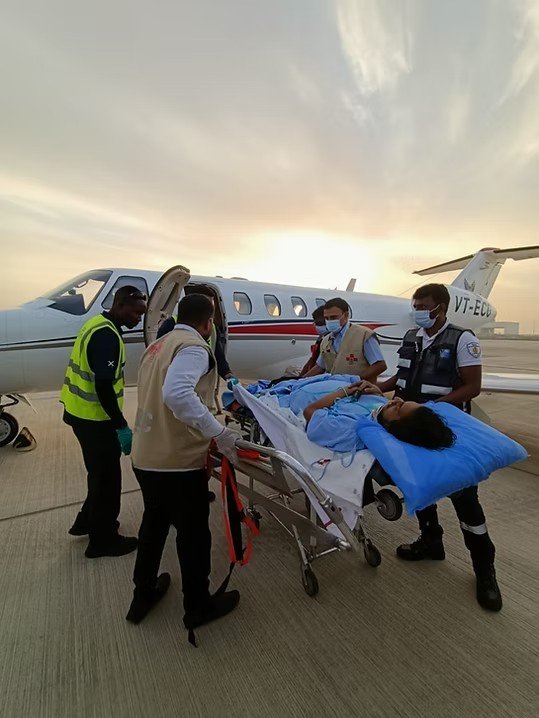
Range first for Delhi corridors
USA–Delhi distance requires long-range, ICU-configured aircraft. Citation CJ2+ (VT-ECG) is a regional platform and cannot replace a long-haul air ambulance on this corridor. Crew duty limits and fuel stops are planned before departure—not improvised mid-mission.
View Our AircraftDoctors before departure slots
Delhi-bound missions succeed when clinical judgment leads. EMSOS operations under Dr. Navneet Singh (MBBS, MD, FCCS) keep fitness decisions ahead of schedule pressure.
Crew mix is set after reading the Delhi receiving expectations and the US chart—not from a fixed roster. Coordinators keep the family loop short and factual.
MBBS, MD, FCCS
Chairman and Managing Director · EMSOS Group of Companies
Accountability on Delhi handovers
What families notice is not slogan language—it is whether someone answers after midnight with a clear yes/no on fitness and a written plan for the NCR handover.
Delhi missions stay under EMSOS doctors led by Dr. Navneet Singh (MBBS, MD, FCCS). Fitness is decided before sales language hardens—so NCR families get a yes/no they can act on.
We plan USA–Delhi legs on aircraft that can carry ICU kit and fuel-stop margins. Regional jets are never sold as coast-to-coast solutions for this corridor.
EMSOS has coordinated India repatriations long enough to know Delhi admission habits differ from Mumbai or Bengaluru—and we brief families accordingly.
US cities we fly from · Indian cities we fly to
EMSOS arranges US hospital pickups and monitored flights into Delhi-area airports, then ground ambulance to the named NCR ward—not a vague “North India” drop.
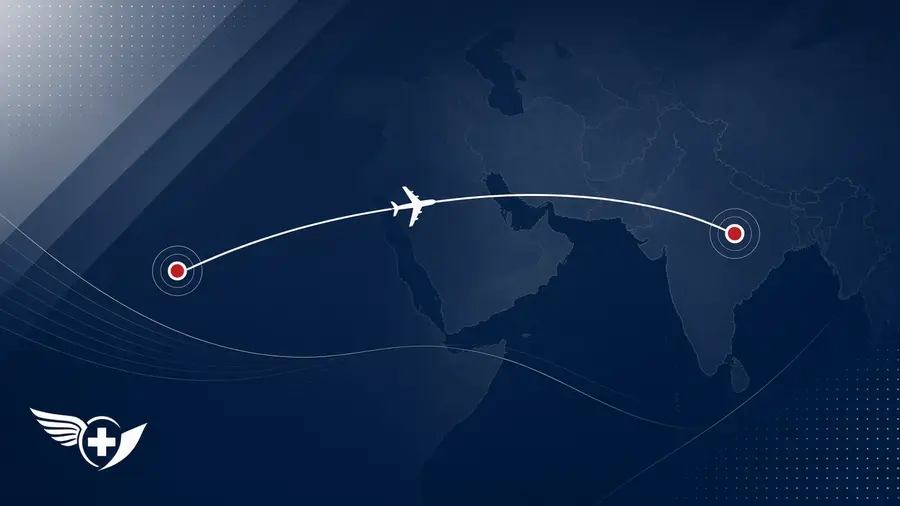
We open a Delhi receiving contact before wheels-up so NCR admission is not improvised on landing. Share the hospital and consultant—or ask us to discuss options near family.
Get a USA to Delhi Quote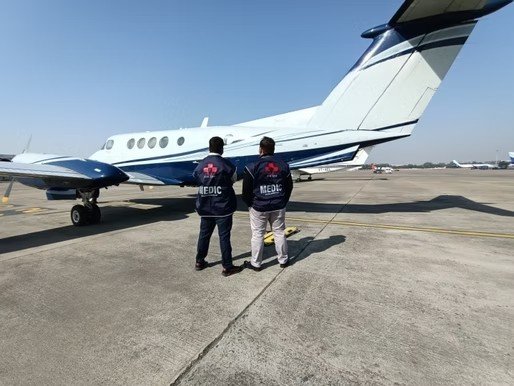 US departures
US pickups span New York, Chicago, Houston, Dallas, Los Angeles, San Francisco, Atlanta, Miami and Washington DC—with ground transport to the departure airport that fits the Delhi plan.
Call our coordinatorsFor a USA to Delhi transfer, the aircraft is only one link. EMSOS coordinates US discharge timing, ground ambulances, fuel stops and the NCR bedside handover as one sequence.
Documents & process
1. Share the Delhi case—Call or WhatsApp with US location, Delhi hospital target and basic condition—reports help speed the fitness view.
2. Physician review—EMSOS doctors assess fly/no-fly, kit needs and whether Gurgaon or Noida is actually the bedside.
3. Plan and quote—You receive an itemised plan covering aircraft, crew and ground legs after the chart is read—not before.
4. Confirm and launch—Once acceptance and fitness align, coordinators lock timing and keep both countries updated.
For Delhi missions, gather passports/OCI or visa copies, recent US discharge notes, medication list, and the receiving doctor’s phone in Delhi or the wider NCR before you ask for a firm aircraft hold.
Start Step 1: Call +91 7272811811Who usually flies into Delhi
Typical candidates cannot safely sit on a commercial flight and need stretcher or ICU monitoring into Delhi. Fitness-to-fly is decided case by case; we will defer if risk is unacceptable.
Stroke, bleed or cardiac cases needing monitored transfer into a Delhi unit.
When a Delhi ICU accepts and cabin ventilation is confirmed.
Immobilisation and pain plans for accident patients heading to NCR care.
Moving closer to Delhi specialists with infection-aware monitoring.
Stretcher patients who cannot sit commercially into Delhi.
If the Delhi scenario is not listed above, send the reports anyway. If flying is not yet safe, we will say so and outline what must change first.
Five reasons Delhi families stay
Doctors—not sales—decide whether a Delhi flight is safe enough to quote as firm.
We treat Delhi, Gurgaon and Noida as different last miles when you name the ward.
One desk answers across US and India time zones with checkpoint updates.
You see aircraft, crew and ground legs after review—no mystery lump sum.
Receiving-side paperwork habits are familiar to the coordinating team.
Cabin kit for long NCR missions
For Delhi corridors, equipment is checked against duration, stops and the acuity the NCR receiving team expects—not a standard tourist kit.
*On request. Exact equipment depends on the aircraft arranged for your mission.
Care for the whole family
Family support
Delhi-bound families hear each checkpoint before, during and after the flight—documents, companion visas, fuel stops and the NCR bedside handoff.

Support
Recent discharge summary, medication list, oxygen or ventilator settings if any, US hospital location, and the Delhi or NCR receiving contact. WhatsApp to +91 7272811811 is enough to start.
The aircraft lands at a suitable airport for the mission. Ground ambulance then carries the patient to the Delhi/NCR hospital you nominate.
Often yes when an ICU aircraft, trained crew and a receiving ICU acceptance are in place. Doctors confirm fitness individually—never assume automatic approval.
By route length, aircraft, crew mix, equipment, stops and ground ambulances. You receive an itemised quotation after medical review.
Tell us immediately. Ground routing changes. You may also use our Gurgaon page so the receiving address stays accurate.
EMSOS doctors review records and may speak with the US treating team. If the patient is not fit, we say so and discuss waiting or another mode.
Real missions · Real care
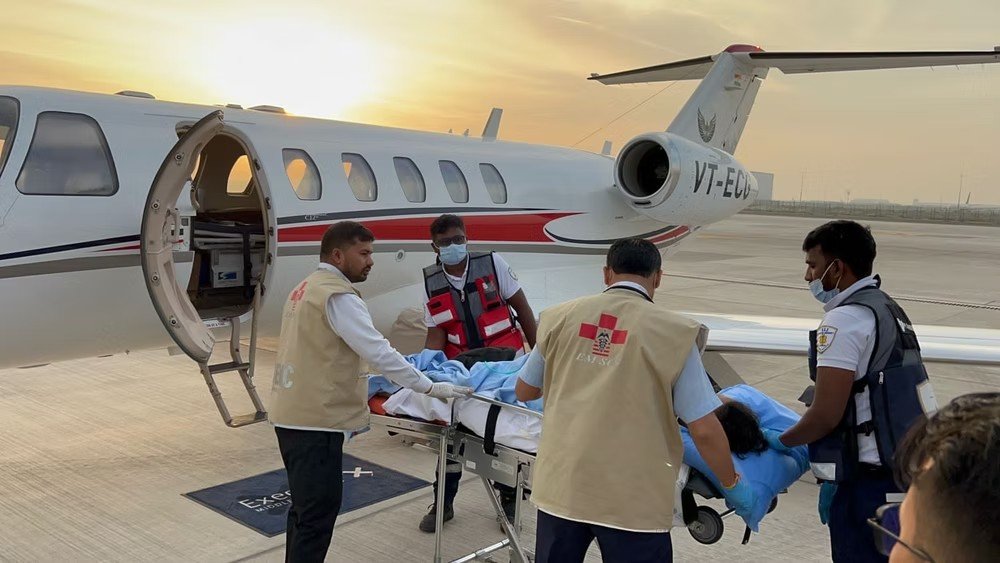
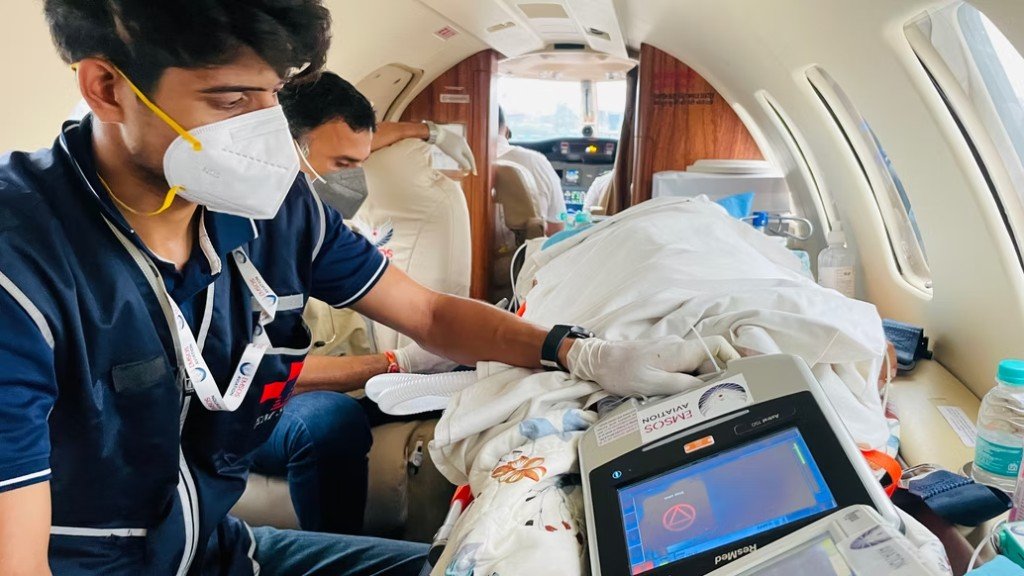
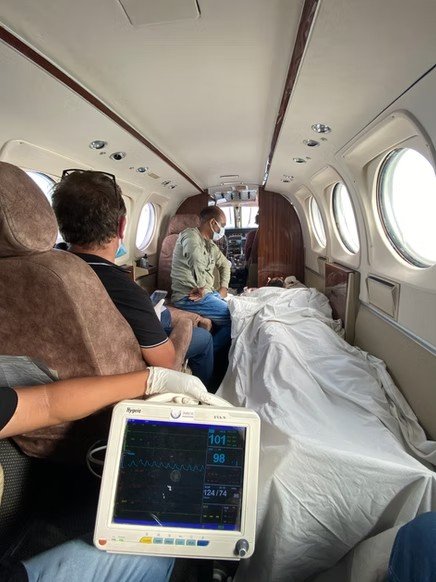
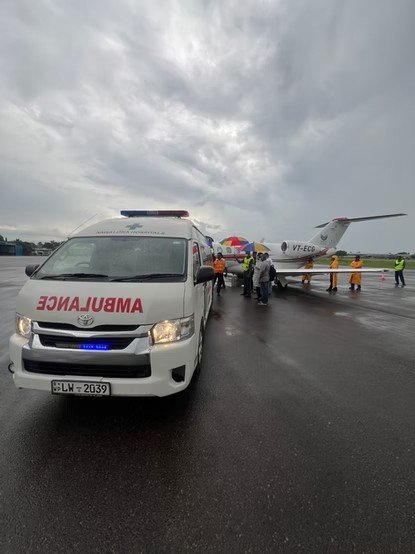
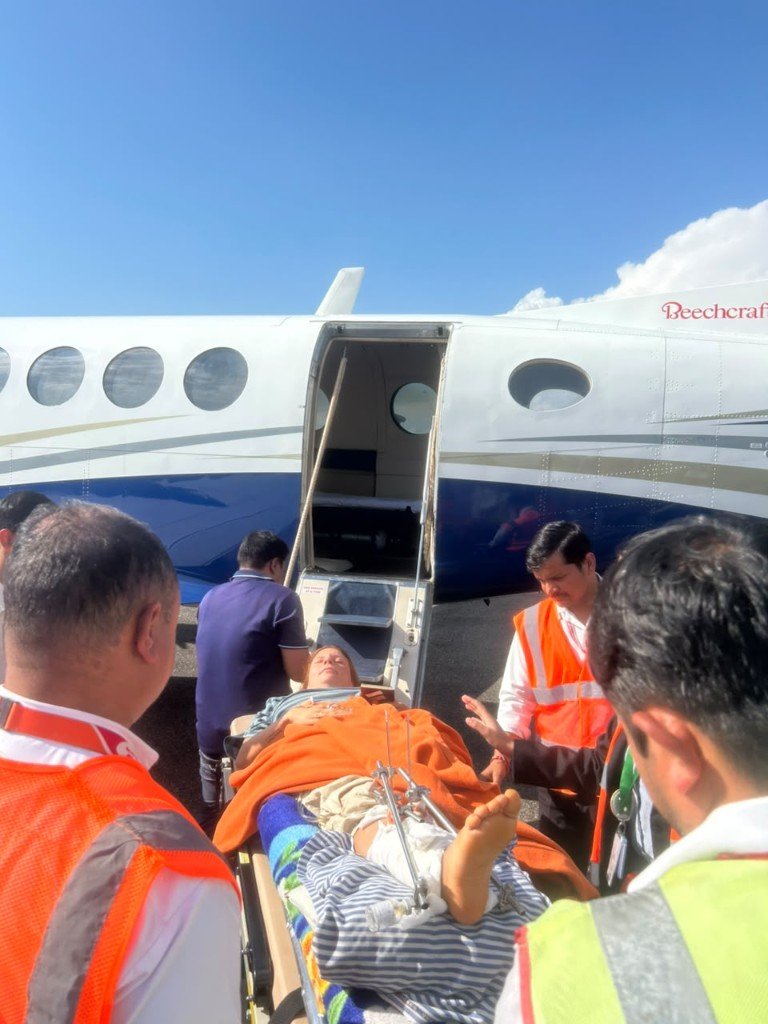
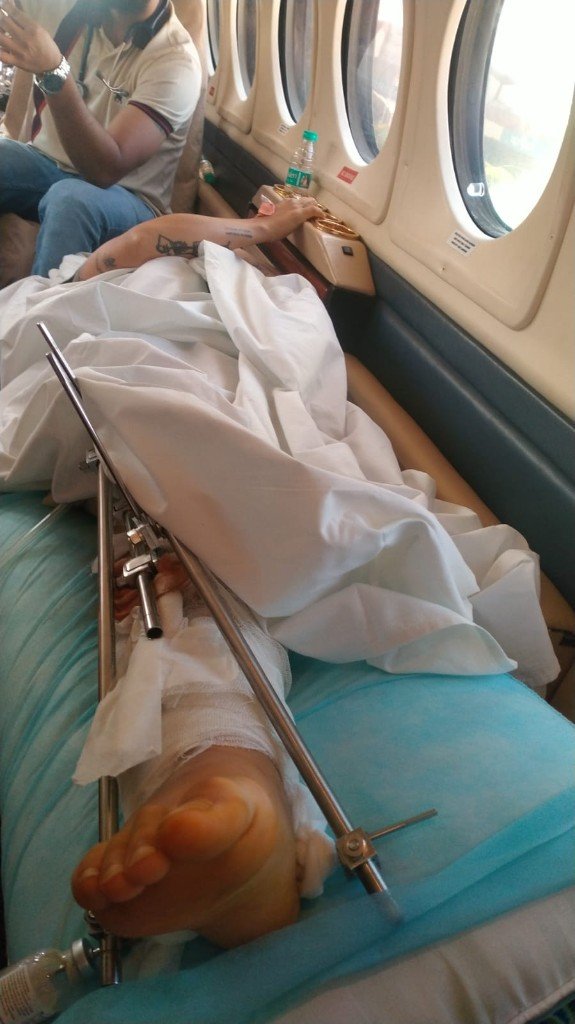
Recent EMSOS air ambulance transfers—from tarmac handover to in-flight ICU monitoring.
View all evacuations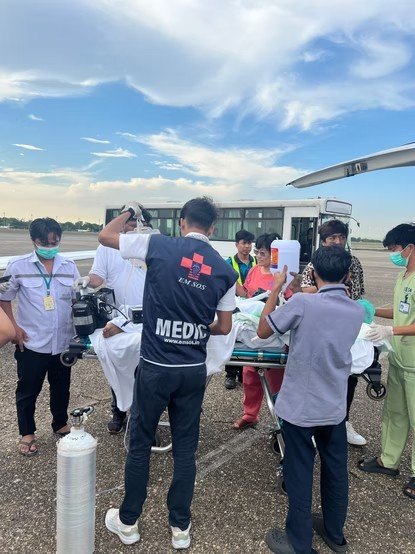
One coordinated network
EMSOS links US treating teams, ground ambulances, airports and crews with Delhi receiving hospitals so nobody is left arranging a leg alone.